
Culinary Program
About the Culinary Program:
The Culinary Program is an associate degree program designed with a strong emphasis on hands-on education, aiming to train highly qualified culinary professionals equipped with advanced practical skills and strong professional competence in the field of gastronomy. Based on contemporary culinary approaches, the program seeks to provide students not only with technical cooking skills, but also with professional kitchen culture, teamwork abilities, disciplined work habits, and operational awareness.
One of the most distinctive features of the Culinary Program is that it is delivered entirely in English. Universal culinary terminology and professional kitchen language are integrated as a natural part of the educational process, enabling students to actively use English in a professional context throughout their studies. This approach significantly enhances graduates’ ability to work in international kitchen environments and to communicate effectively within multicultural professional teams.
The curriculum of the Culinary Program is structured with a high proportion of practical courses. Beginning with fundamental kitchen practices, the program covers a broad range of areas including Turkish and world cuisines, pastry and chocolate production, menu planning, food science and nutrition, food safety, and sustainable gastronomy. Theoretical courses are consistently supported by hands-on kitchen training, allowing students to transform knowledge directly into practice and to graduate with extensive real-kitchen experience.
One of the key strengths of the program is that it is delivered by an experienced academic staff with strong industry backgrounds. By combining academic knowledge with professional sector experience, the teaching staff contribute to the development of students’ technical skills as well as their professional perspectives. As a result, students learn not only how culinary practices are performed, but also why and under which conditions they are applied.
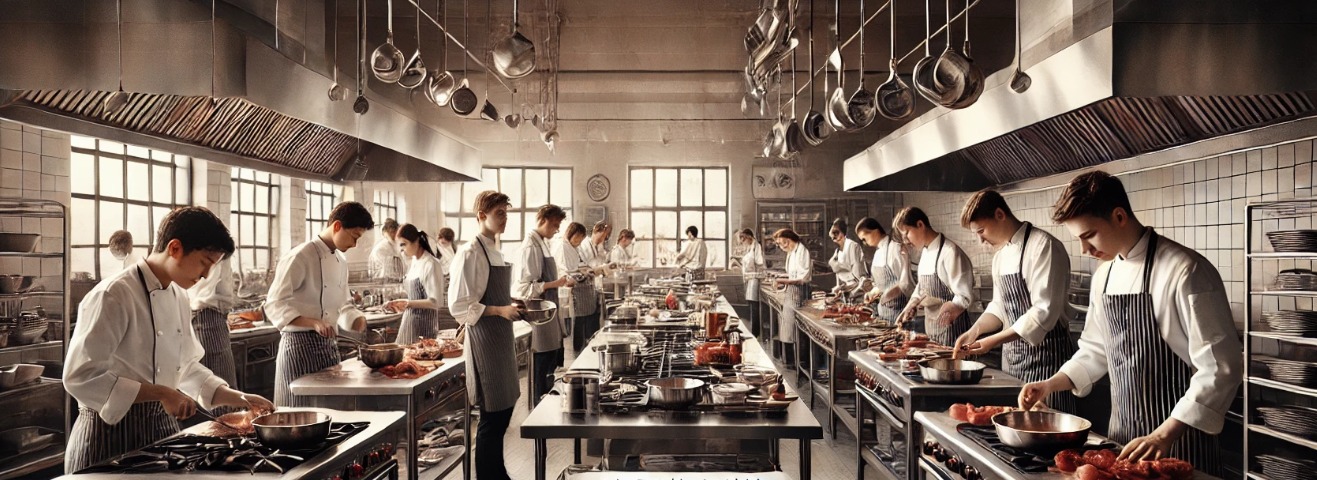
Courses are conducted in modern, highly equipped training kitchens designed to reflect real professional kitchen environments. These facilities provide students with hands-on experience using industry-standard equipment. In addition, the barista workshop area used within the scope of the Beverage Science course enables students to gain practical skills in coffee culture, brewing techniques, and beverage presentation.
The program also includes applications that introduce students to different kitchen layouts and variable working conditions. Kitchen environments that require efficient use of limited space and resources, time management, and team coordination help students develop professional flexibility and problem-solving skills. This approach reflects a holistic educational philosophy that addresses not only culinary production, but also the operational aspects of the profession.
An important advantage offered by the Culinary Program for students considering a career in maritime-related fields is the opportunity to obtain a Seafarer’s Certificate in accordance with STCW standards within the program. This opportunity allows students to support their culinary education with internationally recognized maritime qualifications and to explore alternative career pathways.
With its hands-on educational model, 100% English instruction, experienced academic staff, advanced training facilities, and additional professional qualification opportunities, the Culinary Program aims to prepare students not only for today’s kitchens, but also as flexible, well-equipped, and internationally oriented culinary professionals capable of working in diverse environments.
Mission:
The mission of the Culinary Program is to educate qualified culinary professionals who possess advanced professional knowledge and skills in gastronomy; who are committed to ethical values, have a strong awareness of sustainability, and can adapt to diverse working environments—within a learning environment supported by 100% English instruction, a hands-on educational approach, experienced academic staff, and a highly equipped training infrastructure.
Vision:
The vision of the Culinary Program is to become a model culinary program that is recognized for its 100% English education, practice-oriented curriculum, and strong educational infrastructure, producing graduates who are preferred in both national and international kitchen environments and who contribute to contemporary gastronomy with a commitment to continuous development.
Objectives:
The objectives of the Culinary Program are to:
- Provide students with a strong professional foundation through an intensive hands-on education approach,
- Enable students to communicate effectively in international kitchen environments through 100% English instruction,
- Offer an education that integrates current gastronomic approaches with sustainability and food safety principles,
- Deliver high-quality practical training through experienced academic staff and well-equipped training kitchens,
- Support students in becoming flexible and solution-oriented individuals who can adapt to different kitchen layouts and working conditions,
- Enhance graduates’ employability by offering additional qualifications within the scope of STCW for students pursuing maritime-related careers,
- Encourage graduates to sustain their professional development through a lifelong learning perspective.
Educational Objectives
The educational objectives of the Culinary Program are to enable students to:
- Apply basic and advanced culinary techniques effectively in professional kitchen environments through intensive hands-on training,
- Manage kitchen production processes holistically by acquiring skills in menu planning, standard recipe development, and presentation,
- Properly integrate food safety, hygiene, nutrition, and quality standards into their professional practices,
- Develop knowledge and practical skills related to Turkish and world cuisines and adapt to different culinary cultures,
- Improve professional communication skills through 100% English instruction and prepare for international working environments,
- Access diverse employment opportunities through additional qualifications provided under STCW standards for students aiming at maritime-related careers.
Who Can Apply?
Applicants who have graduated from a high school or an equivalent secondary education institution and who have achieved the required score in the Higher Education Institutions Examination (YKS) are eligible to apply to the Culinary Program. Candidates are expected to have an interest in gastronomy and culinary practices, be inclined toward hands-on learning, and be able to work effectively as part of a team.
Since the program is conducted entirely in English, applicants should be willing to receive education in English. The program offers a strong educational opportunity for candidates who aim to work in international kitchen environments, value professional development, and can adapt to an intensive practical training process.
Career Opportunities After Graduation:
Graduates of the Culinary Program have a wide range of employment opportunities thanks to their hands-on kitchen experience, professional communication skills supported by 100% English education, and sector-oriented training. Graduates may work in various professional culinary environments, primarily within the food and hospitality industries.
Graduates may be employed in:
- Kitchen departments of hotels and resorts,
- Restaurants, cafés, and fine dining establishments,
- Catering companies and institutional food service providers,
- Pastry shops, bakeries, and chocolate production facilities,
- Yacht and ship kitchens,
- Private event, organization, and catering companies,
- Gastronomy-related content production for television, digital platforms, and social media,
- Media projects such as cooking shows, gastronomic documentaries, and brand collaborations,
- Product development and R&D kitchens of restaurant chains and food companies,
- Menu planning, kitchen concept development, and gastronomic consultancy services,
- Gastronomy events, festivals, and pop-up kitchen organizations,
- Sustainable food and social responsibility projects,
- Experience-oriented gastronomy and gastronomic tourism initiatives,
- Culinary positions within maritime-related fields under the STCW Seafarer’s Certificate framework,
- Independent businesses established through their own culinary entrepreneurship.
Vertical Transfer Opportunities
Graduates of the Culinary Program may apply for vertical transfer through the Vertical Transfer Examination (DGS), in accordance with relevant regulations, to the following bachelor’s degree programs:
- Gastronomy and Culinary Arts
- Gastronomy
- Food and Beverage Management
- Nutrition and Dietetics
- Family and Consumer Sciences
Through vertical transfer, graduates may continue their undergraduate education and further advance their academic and professional careers.